Friday, May 28, 2010

Inspired by recent blog post from Arnaud Shihan...

Arnaud Shihan has posted another great blog entry at http://kumafr.wordpress.com/2010/05/27/enter-the-dragon/
 .  What stuck out for me was the line "We also learnt that the dragon was capturing while the tiger was hitting".  This was an "ah-ha!" moment for me as I was pondering the duality of the dragon and tiger so common in martial arts and as the foundational part to the name of our own dojo Ryuu (dragon) Ko (tiger).  In case you are wondering, the last part of our dojo name, Hikan, means secret scroll...

Arnaud Shihan cites Soke as saying the two opposites, dragon and tiger, aren't really in opposition, but in connection or in union with each other.  It's the in/yo or yin/yang, the heaven and earth, etc relationship.  But, tying it to the comment of dragon being about capturing/controlling and tiger about hitting, this gave light to what I see going on today with the way Soke and the Shihan are moving.  When you study the techniques and feeling of what they do, you'll find a duality between controlling or capturing, such as taking the space needed for the uke to rebalance themselves, continue attacking or counter, you'll also find there is a strike involved somewhere.  It's as if the dragon captures and the tiger hits, all as a balanced relationship, so that the two become one.  They are no longer seperate entities.  There is no seperation between capturing/controlling and hitting.  They both are connected to each other.

Anyway, take the time to consider the wisdom being presented in Arnaud's writing and how it relates to the "feel" of what Soke's budo is.  If you look carefully enough, you'll see this duality between dragon and tiger.  Then, find how you can learn from that and evolve your own training.

Gambatte kudasai!

Sunday, May 23, 2010

Another good writing on my weekly e-news...

*** This week's training ***

Focus will be on timing, as explored through the Kihon Koshi Sanpo Kata of Ichimonji no Kata, Jumonji no Kata and Hicho no Kata (not necessarily in that order).  We will also explore some close range concepts and some evasion/survival techniques against a knife attacker.

This last topic is inspired by a violent stabbing last week that happened in nearby Folsom.  I'm not talking Folsom Prison, or some inner city urban jungle, but the small city that is predominately a low crime bedroom community.  A 13yr old boy attempted to steal a BB gun from the Folsom Wal-Mart store.  The manager pursued the kid and grabbed him.  The kid fought back and the manager, trying to use "appropriate" force without trying to hurt the kid, was attempting to restrain him.  Suddenly and without warning, the kid pulled a knife (size/type unknown), repeatedly stabbed the manager in the upper body and fled.  This wasn't a quick, little stab and run.  The kid fully committed himself to the armed assault, as evidenced by the repeated stabbing and from witness statements.  Luckily and fortunately, the manager has survived and is in good condition at the hospital.  Fortunately, also, the kid's parents did the right thing and turned the kid over to local police, who are charging him with attempted murder and robbery.

From the news accounts, the kid is a pretty normal 13yr old on the outside.  Yet, in an instant, he became a murderous attacker, armed with a knife and intent on using it.  Shocked?  Sad?  Angry?  Confused?  Yeah, me too.

What if you had been there shopping with your family, or maybe alone?  Where is your head, or awareness, at during a normal day at Wal-Mart or any other store?  Imagine the scene, this kid, a young teen, stabbing this poor guy over and over.  Maybe you don't see the knife and just see a manager trying to restrain a resistant kid.  Would you help?  Could you help?  What level of force would you be willing to use?  Remember, this kid is aggressively attacking with a knife.  And, he's only 13.

There are those who might imagine themselves as the hero, jumping in and taking control, subduing the attacker and saving the manager.  There are still those who immediately default to deadly force because, in essence, the kid is using deadly force.  And, legally, they would be justified.  Morally, however, the situation is complicated.  Just as in all of life, nothing is black and white.  It's always complicated, even if seemingly simple on the surface.

Now, I'm not going to sit here and pretend to be a "holier than thou" person and lecture you on what you "should do" or "should not do" in regards to your personal choices.  In fact, the situation and the questions raised scare me to my very core and, even with all my experiences and training, I still wish to never have to face such things because I really don't know what I would do, how it would affect me or my loved ones.  As warriors, we are protectors of life.  We value the lives of our fellow humans.  Yet, we also know that sometimes to save a life, a life might have to be taken.  As warriors, we also accept that we may find ourselves in the unavoidable position of having to make that choice.  We are always accountable for our decisions, so the responsibility isn't one to be taken lightly.  Certainly none of us are in a position to judge anybody because we really don't know how we would handle such a scenario.  We can imagine, we can theorize, we can train diligently on "appropriate" techniques, but the sudden "reality check" and shocking brutality of this kind of thing can bring out behaviors and choices in us that we could never have imagined.  Sometimes it could be amazing feats of bravery and heroism.  Sometimes it could be inaction caused by paralyzing fear.  Then, no matter our action or inaction, the emotional impact in us, bystanders, and all others who are affected can also be just as unpredictable and damaging.

These kinds of violent acts exist in everyday life, in every part of the world, in every part of society, and with all kinds of people.  None of us are immune to it.  As warriors, always training, always aware, we need to take the time to read into these stories.  We need to ask the hard questions of ourselves, to honestly assess ourselves, not just physically but mentally and spiritually. 

And, we need to keep training.


See you in class!

Monday, May 10, 2010

On training

(Copied from my dojo e-news for this week.  I thought I hit on something really good and wanted to share it with my blog.  Enjoy!)

This week we are going to continue to drill, drill, drill those basics into our bodies. I feel like our current pace and format is good. The intensity and physical demands set a good foundation for the rest of the class. I find everybody's bodies move better. An important training concept that's quickly becoming recognized as most efficient among fitness experts is this idea of quick, intense bursts of physical stress (with proper technique to avoid injury). Our friend Dan's budo fitness site http://www.warriorinshape.com/ has many great articles that focus on this training concept. As warriors, our bodies may be suddenly and instantly called into extreme physical action. We may go about our normal day for weeks, months, years living at our regular pace. Without warning, we could suddenly and violently be faced with extreme danger, causing a huge dump of endorphins into our system, as the "fight or flight" programming we are hard-wired with instantly kicks in. Our bodies need to be able to handle this sudden stress. Our consciousness needs to be able to adapt, recover and take charge of our bodies. We need to be able to move tactically and have the stamina to handle the physical demands we are faced with.

Then, just as quick as it started, it could end and we need to be able to recover from that as well. Recovery is at the root of ukemi and it begins with exposing our bodies and minds to sudden demands in bursts.
This brings me to another important point - making ourselves train. Our classes are on a weekday, after we've all worked long, stressful hours. We are tired, maybe sore, and I'm sure our brains are wiped out. I know that for most, one of the last things we truly want to do is to be hit and thrown around a mat for a couple hours. Yet, we do. I think this is also an important concept. Danger almost always comes when we are at our weakest moment, when our attention is focused elsewhere, when our bodies are tired, hungry, injured and unprepared. Yet, at that instant, the danger takes over the entire situation and we have to suddenly act. I believe some of the best training comes from those nights when you really don't want to train, yet force yourself to go and just throw yourself into it. Both body and mind are being pushed. The lessons learned go far beyond the technical aspect of the class. And, when you've made yourself train on those nights, don't you always feel good afterward and happy you went?

Life creates far more reasons and opportunities to not train than to get out and train. It becomes easy to put it off another day, another week, another month, and even another year. Yet, if we truly want to call ourselves martial artists, even warriors, we need to make training a priority, not just for our own protection, but the protection of those we love. This is why we show up when most go home. This is what separates us from the rest of society. This is why to be a real budoka (student of martial arts) you also have to strive to be a Tatsujin, or complete human being, a gentleman, one who lives to a higher purpose. It starts with the attitude towards training the body, the mind and one's spirit, every day, every opportunity, every second.

Just like finding the kukan, or tactical space, in a technique and operating within it, we also have to find the kukan in our lives and train within it. Know when it's there and get in it. Know when it moves, find it, then move in it again. There is always kukan if you take the time and have the desire to find it. It's always up to you.

This is what is meant by the term "Gambatte" or "Keep Training"! It's a way of living, not an interruption to it...

Sunday, February 7, 2010

Shidoshi Alex Bushman's "Back From Japan Review" was a blast!

Thursday was great training at Barry's dojo in North Highlands with our buyu Alex who just returned from Japan. He shared many insights and lessons. One benefit of going to Japan during the non-peak season is that you get more personal time with top teachers and Alex was able to spend one on one time with Someya Shihan and even a personal lesson from a long time California native who now lives in Japan. The nice thing about training in that environment (and training with those who come back from that environment) is that you get things that otherwise are not taught or focused on during the busier times of year, when classes are crowded and there's little personalized attention or candid moments.

One thing that Alex brought back was the comments he heard about how there are parallel evolutions happening between how training in Japan is going and how the rest of the world (i.e. the rest of us) is evolving. There seems to be a distinct directional difference in how this art is filtered and transmitted outside of Japan that can cause a lot of confusion and misdirection. This happens for many reasons, some innocent (cultural differences/levels of understanding) and some not so innocent (personal agendas, etc). This affects the way many foreigners are taught when they come to Japan. This is not to mean that we are all doing things wrong, but having an awareness and honesty about our training is probably the more crucial point. Alex mentioned that when we see or hear different things from Japan, it doesn't mean that we have to suddenly drop everything and change the way we train. Rather, it all is a process of guided evolution and it is far healthier to simply adjust the direction, like guiding a river. We have to always keep going, keep training, so we are always making small adjustments to steer on course. This is why we need to always train with the right people, to always expose ourselves to the Japan training (directly ourselves, or indirectly by training with those who are going). But, we also need to be responsible for our own training, to develop our own "eyes" to "see" the difference.

This ties into another point Alex mentioned. Japanese training focuses heavily on proper kihon, or fundamentals. It seems "the rest of us" have a habit of placing the emphasis on the next level, not the core of what makes it all work. I've seen this myself. In Japanese training, what is considered "advanced" is really to dig deeper and deeper into the kihon, to break things down more and more, like going from cellular to molecular and beyond. The tendency for "the rest of us" is to actually move farther and farther away, to expand and enlarge, so that we are only doing one variation after another without any detailed analysis of the dynamics. It really is a contrast in evolutionary direction and why there are so many who want to promote the flashy side of their training. In reality, the "real" training is actually very boring and non-flashy because the amazing part lies in the ura, or the hidden, subtle parts that really can only be experienced firsthand.

This is why in my classes, I've preferred to really only focus on the kihon. I've seen the breakdown in fundamentals when people get into the flashy side of this art. I also have had my decision reinforced over and over when I've trained with my teachers and especially when I experienced Japan training myself. I will always be the first to admit how inadequate my own kihon is. Since I, just like so many others, do not train near enough, how can I even consider focusing on anything else but my own kihon? Kihon may not be pretty, may not be exciting for some, but the time invested is well worth the effort and attention if it evolves my own taijutsu at least in a remotely similar direction to how things are done in Japan. That is, after all, why I choose to first be a student of the Bujinkan, a Japanese martial art. Otherwise, I really am no longer a student, but just one of the countless others who are doing "their own thing", no matter what I might promote myself as. It certainly would be far more comfortable and popular, just not honest.

Alex also covered interesting aspects of the tachi, or Japanese great sword, and the yari, or spear. Many good points came from those weapons, but again the key was a focus on the kihon.

Overall, it was a great class and we had so many good friends show up, some as far as Oakland. The rain pounded heavily on Barry's metal roof and my foot got soaked getting from my truck to the front door. But, all that was nothing compared to the reward of being there.

Friday, January 1, 2010

2010 - Year of the Tiger :-)

Hello friends! HAPPY NEW YEAR!

First let me say THANK YOU for your friendship and training over the many years we've spent together. Last year was a very exciting year and ended with myself struggling with a new level of training and understanding of Soke's budo. Such is the warrior path, never comfortable, never satisfied, and never settling. It personifies the term "gambatte", or "keep going". In real combat, you have to keep moving or you will die. The same is true in life and training. If you aren't moving on, you will fall.

In what has become a global tradition in the Bujinkan community, Shihan Jack Hoban (15th dan) has written his New Year's message on his website. Please take the time to read it - http://www.livingvalues.com/theme2010.html. Jack has an amazing way of taking Soke's multi-level expression of this art and transforming it into a common sense, real world approach. There's a reason Soke named Jack as one of his top instructors for teaching his budo to us westerners.

This year is the year of Tora, or Tiger. In Japanese mythology, the tiger is the opposite of the Dragon and the two are said to be always in contrast to each other. Yet, it is in this dual relationship that both struggle and harmony exist. Where the dragon soars above in the ethereal heavens, with it's great vision and ability to be above everything else below, the tiger is the one solidly rooted in the earthly world, fierce and courageous, full of passion and using it's great physical power to interact and survive in the brutality and harshness of the physical world. These two move around each other in a relationship of attraction and repulsion, like the in and yo (or yin and yang) symbol.

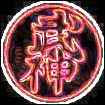
I bring this up because the painting Soke made for me when I passed my godan test in 2007 is a mysterious piece of both calligraphy and symbolic art, yet when I asked for clarification, Soke said it is "Ryuuko Hikan". The first half, "Ryuuko" is the dragon (ryuu) and tiger (ko). The third, "Hikan", means "Secret Scroll". But, the Ryuuko or combined relationship of dragon and tiger, is what I have made the root of my own personal path, and used as the name for our training group. There is a deep significance for me in this name and I believe this year, being the tora, or ko, will also carry deep significance.

But, it is important to understand that it isn't the tiger, or the dragon, that is the focus. Rather, we should seek the kukan, or space, that exists between them. It is in that space that one can move, create, and live free.

With that said, I have been thinking heavily on what to dedicate this year's training to. Of course, my first dedication is to capturing the feeling of Soke's budo as best as I can, with whatever exposure to it I can get. But, also I find that the training for 2010 should also capture the feeling of the symbolism of the Tiger. For me, this means that training needs to be based in common sense, real world skills. But, even more importantly, the training should have the feeling of the heart of a tiger. This is something easily lost when training becomes comfortable, safe and routine. In the real world, "routine" gets you killed. Letting your guard down out of familiarity will leave you vulnerable. So, why train that way?

I want us to light a fire in our own training. Passion has to be the core, the fuel, for training. If you find yourself comfortable in your training, step outside that comfort. Bring back that passion, that drive, that courage to face risks. It's in the struggle and sacrifice that growth and change happens. If you don't have that in your life, in your training, I encourage you to embrace it now.

As far as Soke's theme this year, he said that it is "Rokkon Shou Jou". Now, there are several implications and meaning for this and, with Soke, you never really know what direction things will go or what teaching will come from it. But, as a starter, I highly recommend you take the time to read Shihan Duncan Stewart's blog post on it: http://tazziedevil.wordpress.com/rokkon-shou-jou/.

Last year, the theme Soke used was Nouryoku Kokoro Utsuwa, or "Talent, Heart, Capacity", also known as the balance of mind, heart or spirit, and potential. But, this year it would seem we are transitioning into a twist of "Rokkon Shou Jou" to mean "the purification of the senses through laughter". How this will mean to us may vary and Soke may also reveal his own clarification on this topic. But, for now, I think the feeling is what is most important. I am reminded of a phrase I am seeing more and more common in today's society: "Live, Laugh, Love". This kind of Sanshin ("3 Hearts") is the secret to living fully. For me, it is at the root of Soke's budo and goes far beyond the kata. It is the kokoro, or heart, of budo.

It is this passion for living that I want to embody, to pursue, in our training and, for me, in every area of my life. It is the theme for the Ryuuko Hikan Dojo for 2010. I encourage you to make it yours as well.

Happy New Year!

Saturday, November 28, 2009

Thanksgiving and the Budo Heart

It has been a LONG while since I wrote on my blog, but my weekly email to my students and friends touched on something very personal for me. So, I thought it would be good to post it here. Enjoy!

Thanksgiving and the Budo Heart (Kokoro no Budo)

During this holiday, it is important for one to ponder all the blessings and good aspects in his/her life and to be thankful for them. Sometimes, this may involve recognizing and being thankful for some painful things or negative people - because often they unlock blessings that otherwise would not have happened. This is a very valuable mindset for a warrior, that even in perceived defeat, a victory can be born. At the root of "nin" (perseverance) is this concept of the will to survive, to keep going ("gambatte") no matter how bad things seem.

I think the fall season is appropriate for this type of holiday. The harvests are done and historically people prepared to ride out the winter with their harvested stock (blessings). They know that nothing will grow in the harsh winter and animals either migrate to warmer climates, hibernate in hiding, or simply die off. Thus, they planned smartly and were thankful to have such bounty to feed their families through this difficult time of year.

In this age of commercialism and instant gratification, it is normal for people to not look at their life in this type of ebb and flow. They have high debt, lower income, higher food bills - yet get up at 4am to crowd the stores to buy things that, in honest retrospect, they (and those they plan to give the gifts to) really don't need. You have houses being foreclosed because the overzealous homeowner failed to plan for a downturn in the market and bought what they otherwise really couldn't afford ("interest only" loans, etc). You have credit card companies now, without notice, jacking up interest rates to milk more out of their "customers", yet credit companies report usage at an all time high. More and more people are filing for unemployment, welfare, etc, yet consumer purchases of entertainment (XBox 360, Iphones, PS3, Blue Ray, etc) are holding steady at their high rate.

These are prime examples of those who really aren't "thankful" for the blessings, the harvest, of what they actually have - instead they seek more when they really should be rationing/enjoying what they have and wait out the "winter" in their lives. Not everybody is like this, but it is becoming more and more normal for people to violate this natural "law" of living.

As warriors, we need to train well and train often. We don't face combat every day (thankfully) . We are, as a society, relatively safe compared to other parts of the world. Yet, we train to develop skills, awareness and the "warrior heart" so that if we are faced with danger, we have the awareness to prevent/avoid and the abilities to adapt and overcome when necessary. What good are these "budo blessings" when we lack awareness and make negative choices that cause pain in not only our lives, but also those around us? The heart of a warrior is a thankful one - thankful to be alive, thankful for peace, and thankful for the lives saved. It makes the pain of war bearable. The "blessing", the "harvest", of being alive (and saving life) and the thankfulness allows the heart to survive the ugly reality that is pain and death.

In this time of the "harvest", I encourage you all to look at your own budo path and your life. Consider where you are now and how many "blessings" were involved - experiences, choices, people. Be thankful for all that is good - and all that is not-so-good (I hate to say "bad") and recognize those areas in your life that maybe you need to rest on your harvest and wait out the "winter", being thankful for what you have instead of what you don't have (or where you are not, how much you don't make, etc). It's a time to focus on the half-full part of your glass.

When "winter" is over and the first signs of the rebirth of "spring" comes, then we can look at putting forth our seeds/investments of time, resources, etc. For now, lets just enjoy our bounty!

I'm not writing this to try and be some "spiritual advisor", trying to lecture you on what you should be doing or how you should feel. In fact, I really don't write this much about these things. But, I think the "warrior heart" is something that needs to be explored, talked about and developed. So, at a minimum, let my writing be a catalyst to motivate this introspective, personal approach to your budo path and apply it to your life - not tomorrow - but today. Right now.

In conclusion, I want to thank each and every one of you for your friendship and all the good times we've had over the many, many years of training together. I am thankful for every one of you - even those who are no longer training with us - as vital in making me the budoka I am today. I could not have done it without you!

Happy Thanksgiving!

Sunday, December 21, 2008

Tactical concepts...

I was watching a promo video the other day sent to me by a friend. The video highlighted a weekend workshop with Russian Systema instructors, centered around firearms and hostile situations.

Although I enjoyed watching the video (and equally LOVE that kind of training myself) I was left wondering why someone would do that type of training. The seminar focused heavily on situations where you are armed and facing attacker's who try to strike and grapple you, or you are faced with an attacker firing on you. In all those situations, you have to first move for cover/positioning, then draw and return fire. They practiced firing from a variety of positions and circumstances, even putting themselves in a kind of pushup position, with right hand raised and firing pistol, while the instructor repeatedly kicks them in the stomach/ribs!

In all those situations, I kept thinking of the average person. The average person does not carry firearms. The average person is not bent on closing and taking out their attacker in those encounters. The average person just wants to escape danger, using whatever tools they have at their disposal. This includes just duck, cover and run.

It's those above the average person who take things to the next level. This includes having the awareness to look out for the welfare of others. It's this base instinct that causes some to pursue occupations like military, law enforcement and security. However, it's also the base instinct for those who would sacrifice themselves to save others, and swallow their fear to actually go after the attackers.

Even with all that, most people do not carry firearms. So, unless you are in occupations or situations where you are armed, it would make more sense to train as you would be on any normal day. Everyday items like cell phones, pens, briefcases, laptops, ID cards, etc all become effective tools to either enable escape, protection or elimination of threat.

With that said, however, the internal aspect plays the primary role, regardless of the role the person plays. Building a fighting spirit in the person will allow them to draw their resilience without the controlling force of fear. No matter the skills and weapons, if fear disables the person (like a deer in headlights), then they are as good as dead. So, no matter the training, it has to start with the internal drive of the person.

I find myself taking that into account when I consider how most people train in martial arts. Most people train once or less per week, avoid seminars or go once in a great while, and limit their training to what they do in the dojo. These people are not warriors, or even martial artists in the greater sense, but are martial enthusiasts or hobbyists. They put training last on their list of agenda items. It takes up their calendar as just another appointment, another thing on their already packed plate.

These people may have skills above the average person. But, I fear they may fall into the general catagory when real danger presents itself. They don't have the warrior spirit inside because their budo training isn't a part of everything they do. Since their budo training plays such a little part of their lives, it plays a little part of who they are.

You can never learn a technique for every situation. Nor can you train all day, every day, in fighting techniques. What you can do, however, is to integrate your training into the everyday life you live. Pay attention to how your body moves, how balance plays it's role, and how situations happen around you. Notice how your breathing works. Be aware of when you let your awareness drop. I'm not speaking of being paranoid, but just aware. Know where your tactical spaces are at all times. Notice the mannerisms of people around you.

At the same time, learn to control stress, emotion and distracting thoughts. You need to return to a "Zero State" at all times.

Just doing this alone isn't enough. But, again, nothing works without a proper inside. So, this is something which affects everything you do, regardless if you are at work, at home, at the movies, or in the dojo. Then, when the poop hits the fan, even in the most dire of circumstances, you will just do what is natural to you.

Thursday, December 11, 2008

Basics...

I was reading the latest blog entry by Shihan Doug Wilson, where he wrote about the latest Daikomyosai event in Japan. Daikomyosai (aka DKMS) is our annual Bujinkan shindig, where members from all over the world converge in Japan to train 3 days with Soke.

Typically, the DKMS training was in the Budokan in Ueno. But, this year it was held in a beautiful park common to us Bujinkaneers. This park is thick with trees and has an obstacle/edurance course on both dry land and over a man made pond.

Anyway, people who attended are writing about how the training was really on fundamental things and combat strategy. This year's theme was Togakure Ryu, which is tied to Japan's Feudal Period history as those people who operated behind the scenes; a kind of "Spec Ops" tradition. As part of that tradition, knowing how to get in and get out of possible hostile areas was a major part of the training. Gathering information was a valuable tool in the wars and these guys had to be good at it.

According to those who were there for this year's DKMS, training was challenging. The ground was damp (even muddy in some areas), uneven and scattered with trees and shrubs. They threw each other to the dirt ground, slammed into trees, threw dirt, and many other "real combat" things which are impossible in the sanitized environment of a martial arts dojo. It was a "real world" experience.

This made me respect the emphasis on kihon, or fundamentals. With so many kata, or techniques, that make up the 9 traditions of the Bujinkan "umbrella", I am thankful that we really don't have much that make up our fundamentals. Yet, those fundamentals are universally applicable and exist in all the traditions.

I have always taught in my classes that the most important attribute for a warrior is the ability to adapt to any situation. I have found that if you approach training simply and become adaptive with it, your ability to survive a real situation increases much more than if you learned hundreds of kata - prearranged, repeated combinations of skill sets.

Our Bujinkan Budo Taijutsu has two elements of training which make up the bulk of the fundamentals. The first are solo movements called Sanshin no Kata, which are a series of five solo kata. These are designed to develop proper movement. The second are called Kihon Happo, or eight fundamental laws/principles.

These are further broken down into two sections. The first, called Koshi Sanpo, are comprised of three methods of striking (or how to keep tactical space open). The second are called Torite Goho, or five hand/arm escape methods. These are methods of grappling, once that tactical space is collapsed.

The combination of integration (Sanshin no Kata) and application (Kihon Happo) are at the root of all our training, whether armed or unarmed, against weapons, or against multiple opponents. These techniques are all simplistic on the surface, yet hold countless layers of development and efficiency. It is through a peeling of the layers that we learn to adapt them to whatever the situation holds.

It is my belief that this is a correct method of training and one which is overlooked by so many who rush on to the next kata, the next idea, and the next theme. They miss the lessons which are lying just underneath the stuff they already know.

For the next week or so, we'll be going back to basics. I plan to do drills, target shield striking, jumping, rolling, and so on. It's going to be a very physical time, but one that shouldn't be put off for too long.

So, let's get going!

Tuesday, November 25, 2008

On being a "Master"...

A recent post on Shihan Doug Wilson's blog reminded me of something discussed at a recent seminar by Shihan Jack Hoban.

You can read Doug's post at http://henka.wordpress.com/2008/11/24/master-who.

At the seminar, Jack said at his seminar and in conversation. He spoke about budo having no beginning and no end and, if something has no beginning and no end, then there is really no real measurement, no rank, no "mastership". What is the goal? What are we trying to achieve? What is it that we "think" we're learning or gaining? Is it something, or really nothing. Or, is it simply a process, an experience, which shapes who we are as individual human beings?

We all begin budo training in our lives at a particular point. Some people take a while to "get it", some people "get it" right away, some never do and some come into it already "getting it". Yet, the art itself has already existed, being timeless. It's like a constant flowing river with no start or end, since any start or end would cause the river to stop - in other words, it has to be endless to be continuous. We just hop in wherever we are along it's path.

He talked about how, no matter the rank in the room, we really were all the same. If there was an end to achieve, then we could measure how much budo we "get". But since there isn't, we can't. The only measurement we have is in how far we have come since our own individual beginning. This is a purely personal thing, which cannot possibly be compared from one person to another, but only in regards to the individual.

This is why, no matter the rank of the person, we are all students first. There really is no "master", there is no "teacher/student" line. Simply put, we all are on our own personal path, as a student, never able to "master" anything because our path is never subordinate to us. Quite actually, we are the subordinate, we are the servant, of it. It is our "master". Because we are humble in knowing our place, we become students and the real learning happens. This is where humility becomes our yoroi (armor).

To "master" something means to take ownership of what we know, to hold on to it as some kind of tangible thing. Yet, we are admonished by Soke to "gambatte" (keep going/training). This means we must always keep moving forward, not to hold on to anything, but to just keep moving. We are not to sit back on what we've done and learned up to this point. We must always keep looking ahead. Jack spoke of things he learned in his early years and having thought he knew it, yet learned later that he really didn't understand at all. So, how many people think they "know" something now, but will eventually discover they didn't understand it? Does this ever end? Even Soke himself talks about constantly discovering new levels in his own understanding, that his teacher (Takamatsu Soke) is teaching him from the grave. Is there ever a time when we can safely say we "know" anything? Is there ever a time we can capture the river, yet still keep it flowing fresh and vibrant?

Anyway, I found this interesting. As I trained in the room with so many people, most of whom were dan grade, many of whom 5th dan and above, I found myself seeing each person as just another student on their own path. A shodan is on a different path than another shodan - their ranks are not the same because it represents something different for each of them. I saw people at all levels of taijutsu, of personality, of physical stature and of beliefs (one guy talked about having to behead goats for a recent religious ceremony!). Yet, we all came together under the flag of peace, of warrior friends, to put aside our differences and just train together as students, so that we may grow a little more in our own budo path. There were no "masters", believe me!

Yet, I see many claiming such things and often wonder, as Doug did in his blog and as Jack wondered at the seminar, "master" of what?

For me, I'm focused on just staying on the river and enjoying the journey to nowhere.

Sunday, November 16, 2008

Another great seminar!

On Saturday, I attended a wonderful seminar taught by Gojudan (15th degree black belt) Jack Hoban. Just as all of Jack's seminars, it was absolutely wonderful! The location was a new dojo sharing a building with a karate school. The room was packed! Yet, the closeness was great to be able to spend time with Jack as he went around the room helping, guiding and sharing his great stories.

We spent considerable time just doing "basics". I say "basics" in quotes simply because there really are no basics, per se. Once you start peeling the layers, there are countless levels of detail, efficiency and tactics to make "basics" not so "basic" anymore. This is exactly what the seminar was like, much to my pleasure.

We started by looking at some rolling concepts. Since our Soke's theme this year has been Togakure Ryu, we looked at that influence in techniques and strategy. This year also has been the Year of the Rat in asian astrology, so the feeling this year has been indicitive of a rat - an efficient survivalist, being able to sense and avoid danger, and having an intuition to always find the escape route.

In Togakure Ryu techniques, especially in the beginning levels, the emphasis is to evade and escape, using strategies and tools made for that purpose. So, in the seminar we practiced rolling as a means of escape and avoiding danger.

We also looked at three basic kamae, or postures. The first, Ichi no Kamae (aka Ichimonji no Kamae), involved standing in an "on guard" posture and he went into detail about the importance of the lead hand in "shaping/conrolling the space". He did similar things with the other two kamae, which were Hicho no Kamae and Jumonji no Kamae. In Hicho no Kamae, he talked about the importance of not collapsing the space when drawing the lead leg back.

In fact, this concept of not collapsing the space was an important element in all his demonstrations. He showed the Sanshin no Kata as a method to practice this concept. For instance, in Chi no Kata, the tendency is to pull the lead hand back before the rear hand comes forward. This causes the mai ai or distance between you and your target to collapse, inviting an attack. The same was true for the other Sanshin kata, such as Sui no Kata, Ka no Kata, etc.

He also spoke about doing Jodan and Gedan Uke (blocking) without collapsing the space, which was a different approach than many basic ways I've seen of doing those techniques. It made total sense from a tactical point of view and was something I noted for my own teachings and training.

We didn't do much in the way of weapons. But, we did look at some sword work, in particular how to create an opening to draw in an attack. When you and an opponent are both in Seigan no Kamae (a kind of "on guard" posture, where the tip of the sword points at the opponent's heart), there is no space to enter. By shifting "off line", but keeping your sword "on line", you cause them to follow your body with their sword tip. This creates a suki, or opening, to lunge your sword forward. They can't bring their sword back fast enough because they are out of kamae. This was one such example he taught.

The whole seminar lasted for over 7 hours, with a break for lunch. Even the break was nice. Many of us went to a small Italian deli nearby. I had a great panini sandwich and sat outside by myself. Towards the end of my meal, both Jack and Dale Seago (good friend and 15th dan) came and sat at my table. We chatted for a while until it was time to go back. You just can't beat good fellowship time, even with all the great physical training.

After the seminar was over, Jack and many others went to go have dinner and fellowship at a local Mex restaraunt. Unfortunately, I needed to get back home, so I wasn't able to go with them. I'm sure the night was filled with good food, drink and "Jack tales".

I am very happy to have attended the seminar. It was a much-needed recharge to my budo!